To stop pigeons nesting on your roof and ledges, remove what attracts them and then block the places they land and nest. Clean away existing nests and droppings, fix openings into the roof space, and install physical deterrents such as bird spikes, netting or wire systems on the ledges, beams and signage they use. Physical bird proofing is the long-term fix because it changes the building rather than relying on scaring the birds.
Why pigeons choose your building
Pigeons look for three things: a flat, sheltered place to perch, a protected spot to nest and food nearby. Window ledges, parapets, roof overhangs, signage, gutters, beams under canopies and gaps into roof spaces all provide this. Once a pair nests successfully they return to the same spot, and other birds follow.
Why pigeon nesting is a problem
A few birds quickly become a maintenance issue. The most common problems are:
- Damage to finishes. Droppings are acidic and stain and degrade paint, signage, stone and metal over time.
- Blocked gutters and drains. Nesting material and droppings block gutters and downpipes, which can lead to overflows and water damage during heavy rain.
- Hygiene and health. Accumulated droppings can carry fungi and bacteria associated with respiratory illness, so clean-up should be done with protective equipment.
- Slip hazards and appearance. Droppings on walkways and entrances create slip risks and give customers a poor first impression.
How to stop pigeons nesting on a roof
Lasting results come from doing the work in the right order:
- Remove nests and clean affected areas. Clear nesting material and droppings first, using appropriate protective equipment, so birds are not drawn back to the scent and debris.
- Close entry points. Seal gaps in eaves, roof sheeting, vents and soffits with mesh or suitable closures so birds cannot get into the roof space.
- Proof the landing areas. Fit deterrents to every ledge, beam and parapet the birds use, not just the worst one, or they will simply move along.
- Remove food sources. Keep bins closed and discourage feeding around the property.
- Inspect and maintain. Check deterrents and gutters as part of routine building maintenance.
Which bird proofing method works best?
The right method depends on where the birds land and how visible the deterrent will be:
- Bird spikes suit narrow ledges, parapets, signage and beams. They prevent birds from landing without harming them.
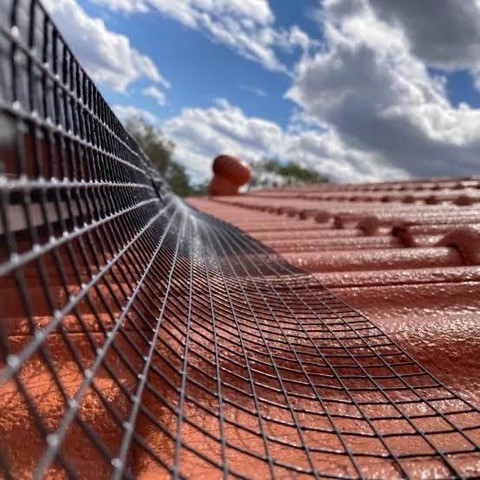
- Netting suits larger areas such as canopies, loading bays, courtyards and roof voids, where it closes off the whole space.
- Wire systems are low-profile tensioned wires that make ledges unstable to land on, useful where appearance matters.
Many buildings need a combination, chosen after looking at where the birds are actually perching and nesting.
Bird proofing on shops, offices and warehouses
Commercial buildings tend to have more of the features pigeons like: long parapets, shop signage, canopies over entrances, loading bays and exposed steel beams in warehouses. Each needs a slightly different approach. Signage and parapets are usually spiked, canopies and loading bays are netted, and warehouse beams can be netted from below or fitted with spikes along the flanges.
Work at height is often involved, so access equipment and safe working methods are part of the job. On a trading property the installation is planned around opening hours and entrances so customers and staff are not disrupted, and it is a good time to clear gutters and check the roof while access is in place.
Do scare devices and fake predators work?
Plastic owls, reflective tape and similar devices may work briefly, but pigeons usually get used to them once they learn they pose no threat. They can be useful alongside physical proofing, but they are not a reliable solution on their own. Physical deterrents remain the dependable long-term answer.
Frequently asked questions
Properly installed spikes, netting and wire systems are deterrents. They stop birds from landing or entering an area without injuring them.
Pigeons return to spots where they have nested or roosted before. Unless nests and droppings are cleaned and the area is physically proofed, they will keep using it.
Yes. Nesting material and droppings block gutters and downpipes, which can cause overflows and leaks, and droppings degrade roof coatings and finishes over time.
Good-quality spikes, netting and wire systems last for years when installed correctly. Periodic inspection as part of building maintenance keeps them effective.
Keeping birds off your building for good
Pigeon problems rarely solve themselves, and the longer nesting continues the more cleaning and repair is needed. SKK installs bird proofing systems for buildings and structures and can combine them with ongoing building maintenance such as gutter clearing and repairs. To have your property assessed, request a quote from SKK.