Acoustic panels absorb sound inside a room to reduce echo and make speech clearer. They do very little to stop sound passing through a wall. Soundproofing blocks sound travelling between spaces and relies on mass, insulation, airtight sealing and separated construction rather than panels on the surface. Many products sold as “soundproof panels” are really acoustic panels, so it is worth knowing which problem you are trying to solve before buying.
What acoustic panels do
Acoustic panels are made from porous, sound-absorbing materials such as mineral wool, glass wool, polyester fibre or acoustic foam, usually wrapped in fabric or finished in a decorative face. When sound hits them, part of the energy is absorbed instead of reflected back into the room. The result is a shorter reverberation time: less echo, less build-up of background noise and clearer speech.
They are the right tool for boardrooms that sound boomy, open-plan offices where noise carries, restaurants where diners struggle to hear each other, and studios or podcast rooms that need a controlled sound.
What soundproofing does
Soundproofing, more accurately called sound insulation, reduces the amount of sound that passes from one space to another. It works through four principles:
- Mass. Heavier walls and ceilings are harder for sound to move through, which is why multiple layers of board help.
- Absorption in the cavity. Acoustic insulation inside a drywall partition reduces resonance in the cavity.
- Decoupling. Separating the two sides of a wall, or isolating a ceiling from the structure, stops vibration travelling straight through.
- Airtightness. Sound passes through any gap, so sealing around doors, sockets, services and the head of the wall is critical.
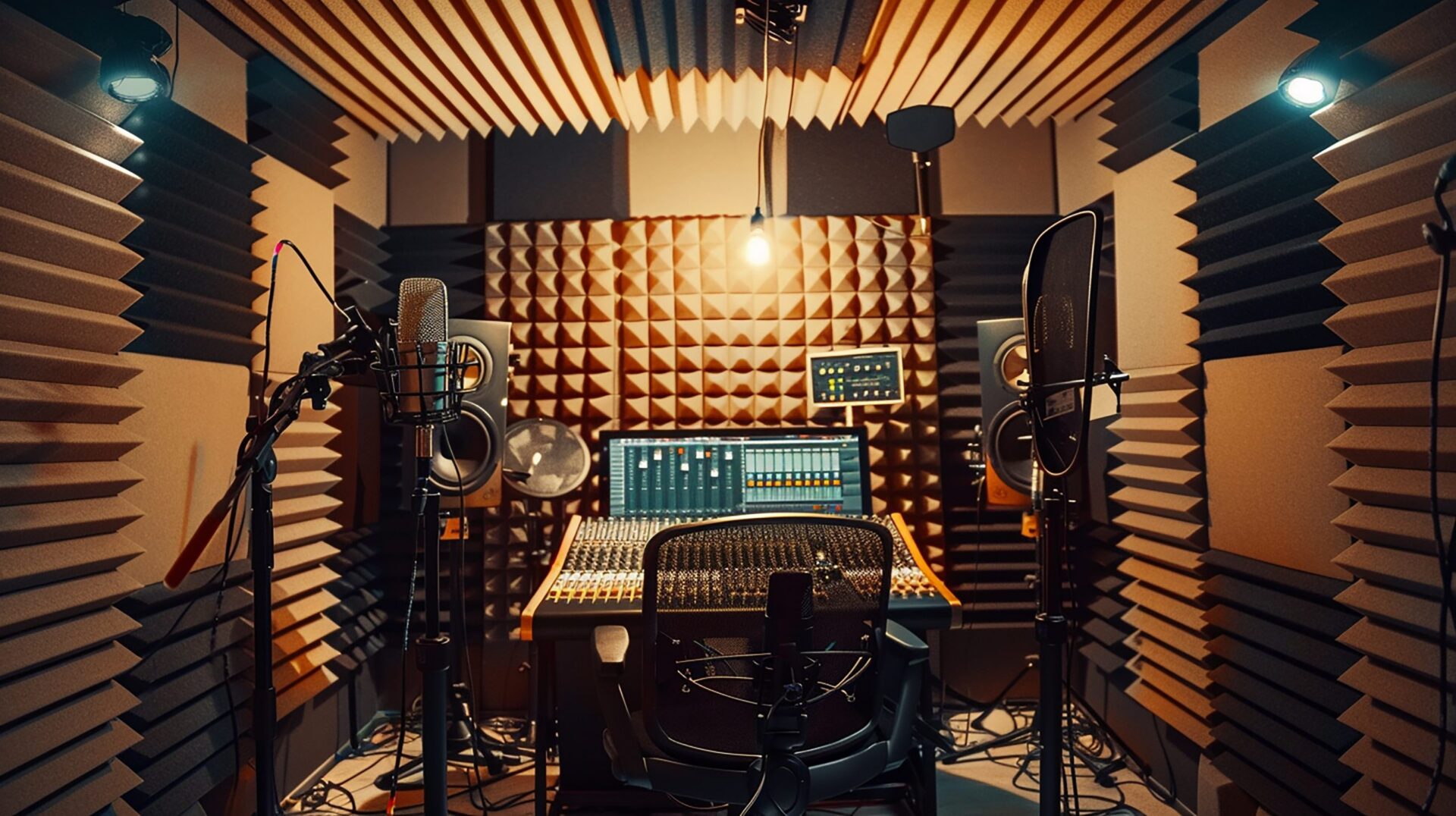
Why “soundproof panels” rarely soundproof
A thin panel glued to a wall adds very little mass and does nothing to seal gaps or decouple the structure. It may make your side of the wall sound less echoey, which can feel quieter, but your neighbour will hear almost as much as before. Products that genuinely improve sound insulation are usually part of the wall build itself: dense boards, resilient mounting systems, insulation in the cavity and acoustic sealants.
Which one do you need?
- Your room sounds echoey or noisy inside: acoustic treatment, such as wall panels, ceiling tiles, baffles or rafts.
- You can hear the room next door, or they can hear you: soundproofing, by upgrading the wall, ceiling, door and seals.
- Both: common in boardrooms, studios and call centres. Soundproof the structure first, then treat the room.
Offices often have both problems at once. Our guide on how to soundproof an office covers how to deal with each.
How much difference does each approach make?
The improvements show up in different ways. Acoustic treatment changes how a room feels to the people inside it: conversations become easier, phone calls are clearer and the background hum of a busy office drops. Soundproofing changes what people in the next space can hear, which matters for privacy in boardrooms, HR offices, consulting rooms and studios. Because the two are measured differently, a supplier quoting impressive absorption figures for a panel is not describing how well it will stop sound passing through a wall. Ask which problem a product is designed to solve before comparing numbers.
Choosing acoustic panels
- Absorption rating. Look for the noise reduction coefficient (NRC) or absorption class. Higher values absorb more.
- Thickness and mounting. Thicker panels and panels mounted with an air gap absorb lower frequencies better.
- Coverage and placement. Enough panel area placed on the right surfaces matters more than one premium product.
- Fire performance. Commercial interiors need materials with suitable fire ratings.
- Appearance. Fabric colours, printed panels, timber slats and ceiling clouds let acoustics become part of the design.
Frequently asked questions
Not meaningfully. They reduce echo on your side of the wall. Stopping sound passing between spaces needs mass, insulation, decoupling and sealing in the wall or ceiling itself.
Acoustic foam absorbs mid and high frequencies inside a room, which helps with echo. It is too light to block sound travelling through walls.
On the surfaces where sound reflects most, typically walls at ear height opposite each other and the ceiling. In meeting rooms the ceiling and the wall behind the screen are often the priorities.
Often it can be improved by adding an independent layer of board on resilient fixings with insulation behind it, and by sealing gaps and upgrading doors, though this reduces room size slightly.
Solving the right noise problem
Getting acoustics right starts with knowing whether you need absorption, insulation or both. SKK supplies and installs acoustic panels and soundproofing systems for offices, studios and commercial spaces, and builds sound-insulated drywall partitions as part of fit-outs. To discuss your space, request a quote from SKK.